

South of Rome, where the coastline begins to open and the landscape slowly shifts from urban rhythms to something quieter and more expansive, the Promontory of Circeo rises unexpectedly from the plain. Isolated, compact, and unmistakable, it has been identified since antiquity with Eea, the island described in Homer’s Odyssey as the home of Circe. Whether island or promontory, myth or geography, Circeo remains one of those rare places where landscape and narrative still seem to overlap naturally.
Today the Circeo is part of the Parco Nazionale del Circeo, one of Italy’s oldest national parks, a protected area that includes coastal dunes, dense Mediterranean forest, brackish lakes and a dramatic rocky coastline. Despite its proximity to Rome, it has remained largely outside international tourism routes, in part because it is not easily reached without a car. This has preserved a discreet, understated character that for decades has made it a preferred retreat for the Italian cultural and artistic world, rather than a mass destination.
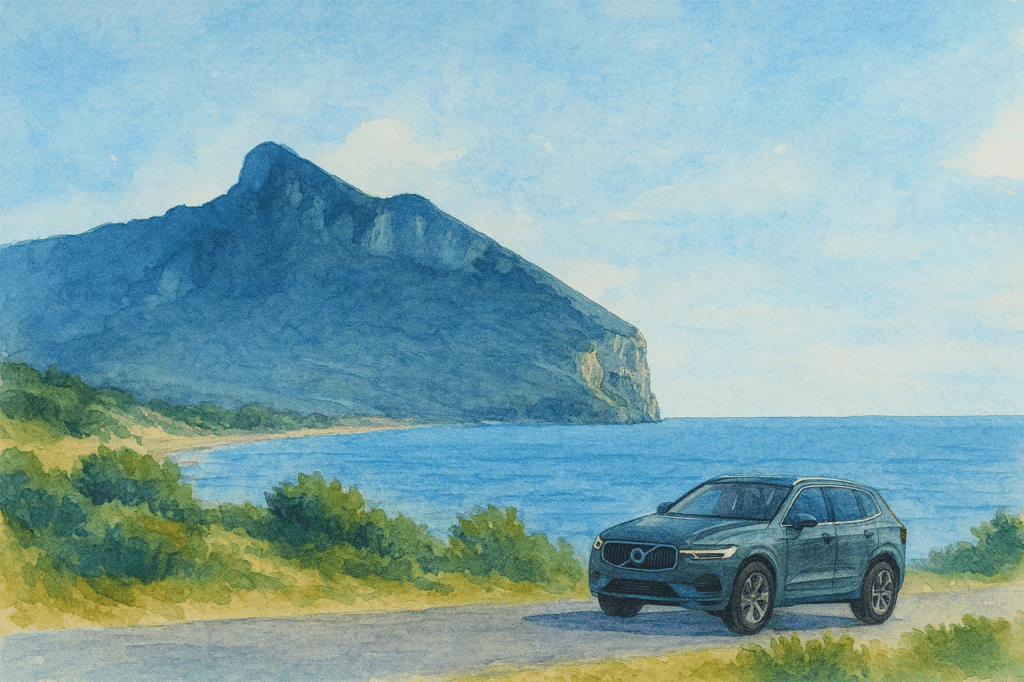
The town of San Felice Circeo, set on the slopes of the promontory, offers wide views over the Tyrrhenian Sea and the Pontine plain. From its terraces and narrow streets, the eye naturally drifts toward the horizon, where on clear days the silhouettes of the Pontine Islands—Ponza, Palmarola, Zannone—appear suspended between sea and sky. Their closeness reminds us how this stretch of coast has always been a point of passage and connection, more than a boundary.
Exploring the Circeo also means encountering its quieter, more introspective landscapes. The coastal lakes—Paola, Caprolace, Fogliano and Monaci—create a rare ecosystem where light, water and vegetation continuously change throughout the day. Inland, shaded paths lead through the forest of holm oaks and maritime pines, offering moments of pause that feel far removed from the nearby coastline.
Among the most striking sites is Grotta Guattari, one of the most important prehistoric caves in Italy, where Neanderthal remains were discovered in the mid-20th century. Its presence adds another layer to the Circeo’s sense of deep time, reinforcing the impression that this is a place shaped slowly, over millennia, by nature and human presence alike.
As part of our Lazio Coast journey, the Circeo is not approached as a single stop but as a landscape to be read gradually. Time is left for viewpoints, short walks, quiet stretches of coast and, when appropriate, simple meals that reflect local traditions—seafood dishes rooted in fishing culture, vegetables from the nearby plain, and wines that speak of the Pontine territory.
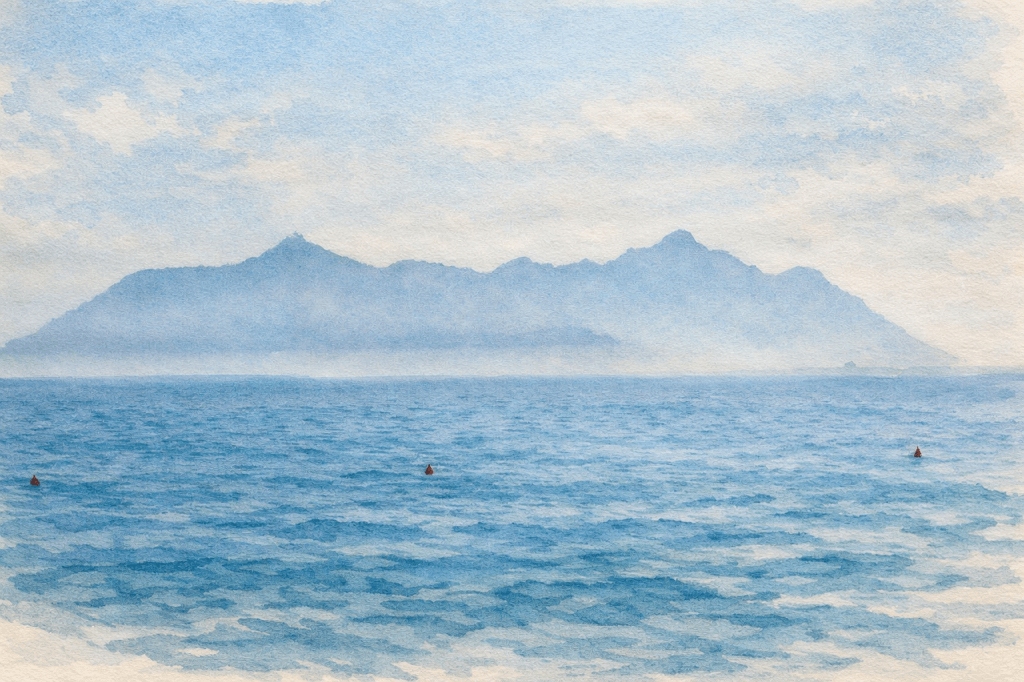
The Circeo does not announce itself loudly. It reveals itself through layers: myth and geology, forest and sea, ancient stories and contemporary life. For travelers willing to slow down and look closely, it offers one of the most balanced and compelling expressions of the Lazio coast—at once intimate, expansive and quietly memorable.





 Quodlibet Private Journeys