
Tuscia and Orvieto from Rome. Etruscan Landscapes, Tuff Cities, and a Deeply Rooted Territory
North of Rome lies a territory that feels older than history as it is usually told. The Tuscia unfolds as a continuous landscape shaped by volcanic forces, Etruscan civilizations, and centuries of settlement carved directly into stone. It is a place where geography determines culture, and where towns seem to grow out of the earth rather than rest upon it.
This journey brings together coast and inland, lakes and plateaus, well-known landmarks and quieter places, all connected by a strong sense of continuity. Orvieto stands as the most recognizable destination, but it is only one chapter within a much wider narrative.
The Etruscan Shore and the Origins of the Territory
The story begins near the coast, around Tarquinia, one of the most important centers of the Etruscan world. Here, the rolling land meets the sea, and beneath the surface lie painted tombs that reveal a refined and symbolic culture deeply connected to ritual, art, and the afterlife.
Tarquinia establishes the tone of the journey: a civilization that shaped the land without erasing it, leaving traces that still influence how these places are perceived and inhabited.
Stone Villages and Vertical Landscapes
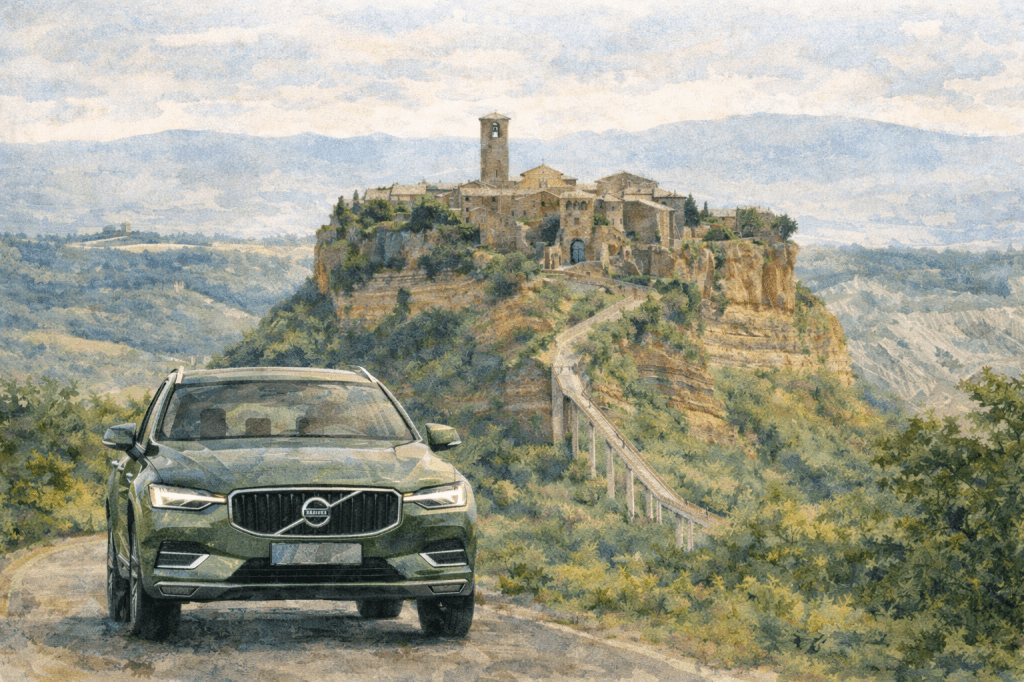
Moving inland, the landscape becomes more dramatic. Volcanic rock dominates, giving rise to towns literally carved from tuff. Civita di Bagnoregio, suspended on its plateau and reached by a narrow footbridge, is perhaps the most striking example. Often described as fragile, Civita feels instead deeply rooted, its erosion revealing rather than weakening its identity.
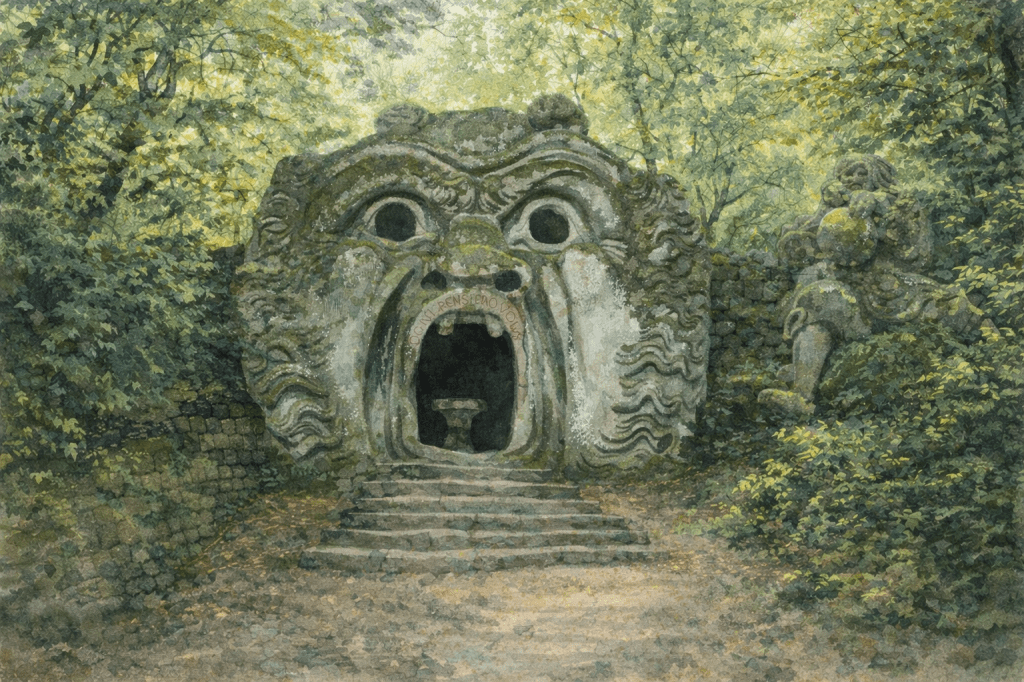
Nearby, Bomarzo offers a different expression of the same terrain. The Sacred Wood, with its enigmatic stone figures, blends mythology, Renaissance imagination, and natural setting into an experience that defies simple interpretation. It is a place where meaning emerges slowly, through walking and observation.
Calcata and the Art of Reuse
Further south, Calcata appears almost unexpectedly, perched on a rocky outcrop above a wooded valley. Abandoned in the mid-twentieth century and later reoccupied by artists and craftspeople, Calcata has become a living example of how old spaces can be reinterpreted without losing their essence.
Its narrow paths, small studios, and suspended views reinforce the feeling of a place lived from within rather than visited from outside.
Lakes, Forests, and Volcanic Silence
The Tuscia is also defined by water and forest. The volcanic Lake Vico, set within a natural reserve, offers a pause of calm and open space. Surrounded by beech woods and fertile land, this area is closely tied to seasonal rhythms and agricultural traditions.
The surrounding zone is known for its chestnut forests, a defining element of local cuisine and economy. Chestnuts appear in breads, desserts, and savory dishes, marking the passage of autumn and reinforcing the connection between landscape and table.

Viterbo and the Medieval Core
At the heart of the Tuscia lies Viterbo, whose medieval center preserves a sense of density and continuity. Stone towers, covered walkways, and enclosed courtyards reflect a city shaped by power, faith, and craftsmanship. Viterbo’s thermal waters and long-standing culinary traditions further anchor it in a culture of everyday use rather than spectacle.
Orvieto: The Cliff and the City
Crossing into Umbria, Orvieto rises dramatically above the plain, its tuff cliff crowned by one of Italy’s most extraordinary cathedrals. The city’s history stretches from Etruscan origins through medieval and Renaissance layers, all concentrated in a compact and coherent form.
Beyond the Duomo, Orvieto reveals underground tunnels, ancient wells, and a relationship with the rock that mirrors that of the Tuscia itself. It is a place where architecture and geology are inseparable, and where history feels embedded rather than displayed.
Taste as an Expression of Place
Throughout this journey, food reflects the strength of local identity. Olive oil, legumes, wild herbs, handmade pasta, chestnuts, and robust wines form a cuisine grounded in availability and tradition. Family-run kitchens and small producers continue practices that favor continuity over reinvention, offering flavors that belong unmistakably to this territory.
These moments of taste do not interrupt the journey; they deepen it, providing another way to read the landscape.
Tuscia and Orvieto with QuodLibet
Within QuodLibet Private Journeys, this itinerary is approached as a single, layered experience. The rhythm of the day adapts to distances, light, and places, allowing well-known sites and lesser-known corners to coexist naturally.
Tuscia and Orvieto offer a journey into one of central Italy’s most fascinating and least standardized regions. It is a landscape where ancient civilizations, medieval towns, and everyday life continue to overlap, inviting travelers to discover Italy not through accumulation, but through depth and attention
What the Tuscia and Orvieto tour offers
- A private day trip from Rome for two guests
- A soft, carefully paced approach to Orvieto
- Private transportation in a comfortable vehicle
- A Roman host who accompanies you throughout the day
- Flexibility and attention to rhythm rather than rigid schedules
Price
Full day tour: 900, EUR
Half day tour: 500,00 EUR
The tour includes: transportation with driver, fuel and pay-tools costs. The tour does not include food, extra excursions and entrance tickets to attractions
Who the Tuscia & Orvieto private journey is for
This experience is ideal for couples and travellers who:
- wish to see Orvieto without the stress of large group tours
- value comfort, conversation and quiet moments
- enjoy iconic places when they can be experienced with time and perspective
 Quodlibet Private Journeys